
The current cybersecurity landscape is considerably more complex and vulnerable when it comes to preventing attacks and safeguarding your data. In the past, businesses only needed basic security measures like antivirus and a firewall to ward off cyberattacks. However, due to the increasing number of cyber threats, companies must now take more extensive measures to secure themselves and their data.
With numerous options available, it can be challenging to determine what's necessary to protect your company. Since the terminology used in this field isn't always uniform or interchangeable, it's crucial to understand the distinctions between some key terms. Many people often confuse the phrases "endpoint antivirus" and "endpoint security" when referring to programs that protect network endpoints against malware attacks, but they are not interchangeable. The correct terms are "endpoint security" and "antivirus software." So, what sets the two apart?
First and foremost, antivirus software is just one element of your company's overall protection strategy. It only safeguards individual workstations, leaving many other endpoints vulnerable to attacks. Its primary role is to identify and eliminate malware, a broad term encompassing harmful and unwanted code. Malware includes:
Your antivirus protection operates in the background while you use other applications. It scans every file or program you download and run for malware. Keeping your antivirus software up to date is essential to ensure protection against all forms of dangerous code. However, with over 1 million different forms of malware created daily, frequent updates can be neither practical nor realistic. Moreover, relying on outdated antivirus software means depending on signature-based malware detection and protection, which is no longer sufficient. Threats are rapidly evolving, becoming fileless or lacking a signature, which makes it easier for malware to go undetected. Antivirus is most effective for basic threat detection in situations involving unencrypted data transfers. While having antivirus software is important, it's not the sole solution for ensuring complete protection for your business.
ENDPOINT SECURITY PROTECTION
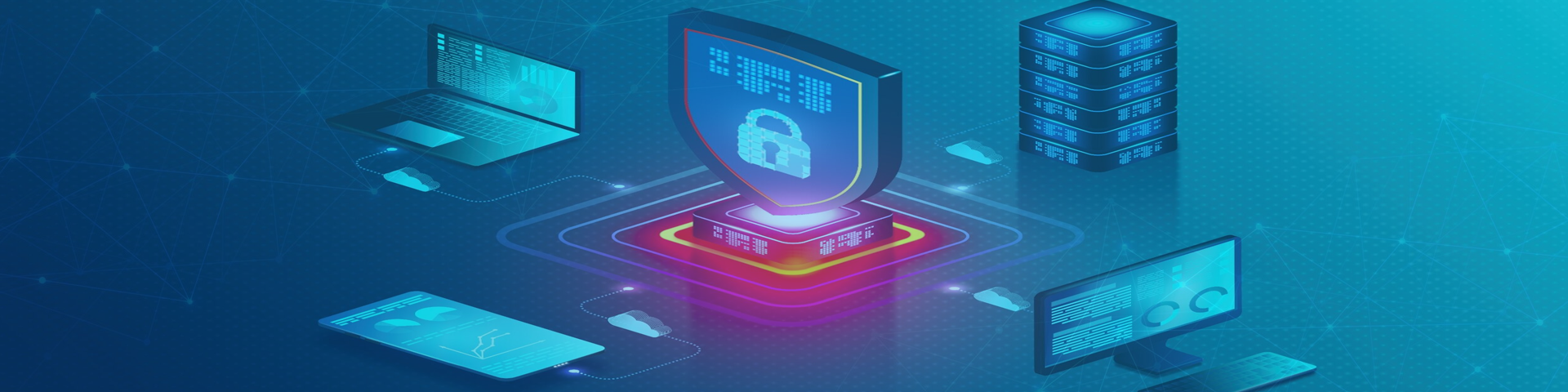
Ensuring comprehensive network security goes beyond just preventing malware and viruses, and this is where endpoint security comes into play. Endpoint security encompasses various components, including antivirus, firewall, intrusion detection, anti-malware solutions, and more. It facilitates the use of endpoint detection and response, data loss prevention, sandboxing, next-generation firewalls, all in addition to antivirus software. Unlike antivirus, which primarily focuses on safeguarding individual endpoints, endpoint security aims to protect the entire IT infrastructure. An endpoint refers to any device used by an end user that connects to a corporate IT network, such as PCs, workstations, mobile devices, and Internet of Things (IoT) devices.
Endpoint security software provides a unified management interface, allowing your IT department to monitor and keep records of all endpoint devices. Unlike many antivirus programs, this simplifies the monitoring of problem areas, suspicious data, traffic patterns, and the secure management of remote endpoint devices. Endpoint security also imposes restrictions on which devices can and cannot connect to your endpoints. For example, random USBs cannot be connected until access is granted. This not only prevents potential security headaches but also protects your systems from potential infections that could expose sensitive or confidential information.
After reading the aforementioned lines, choosing between antivirus and endpoint protection can seem like a no-brainer, but not all businesses have the same requirements. There are a few factors that determine whether to use antivirus software or an endpoint security solution, including:
In summary, if you are a startup or a very small business without a complex network setup, antivirus software can be a suitable choice. It is ideal for companies with basic security needs focused on protecting individual devices, detecting and removing malicious files, and providing security for each workstation. On the other hand, if your company has a networked system with at least five devices, or if your primary security goal is to protect the entire network, facilitate remote security operations, and offer a comprehensive security solution for the entire organization, then an endpoint security solution would be a more appropriate choice.